Refrigerated Meal Delivery Carts for Corrections
Choose a refrigerated cart by load configuration, receiving power and route. Confirm disconnected travel conditions before planning chilled-food delivery.
Quick answer
Choose a refrigerated meal delivery cart by load configuration, receiving power and route. A refrigerated food cart needs a documented plan for travel while disconnected and reconnection at the receiving point.
Refrigerated food carts for chilled meal delivery
Use a refrigerated meal delivery cart when the planned load needs active cold holding while the cart is connected to suitable power. Select the rack or tray arrangement first, then check the receiving location and the route. Refrigeration, insulated storage and reheating each serve a different step in meal production.
These sheets describe refrigerated cabinets and refrigerated/refrigerated carts. Request separate documentation for blast chilling or cooking, and evaluate food temperature during the unplugged route. Plan chilled food loading and food checks through the facility's approved process. A powered refrigeration system requires a confirmed power arrangement wherever active cooling is needed.
Refrigerated cart dimensions, capacity and electrical requirements
The figures below are printed manufacturer specifications for the named configuration. Dimensions are height × width × depth. Use the counts for the listed tray type and shelf arrangement, then check the actual loaded tray and lid. Pan alternatives are separate loads. Count every container in a complete meal before calculating meals per load.
For a refrigerated-cart quote, match the tray and rack arrangement to the primary Equipment PDF in each row.
| Model / specification | Printed specification | Source |
|---|---|---|
| JZR-168 | Refrigerated/refrigerated. 62.00 × 62.90 × 32.00 inches (H × W × D). SmartTray 162; SmartTray XD 130. 120 V; 817 W; 6.8 A; NEMA 5-15P. Drop-down padlocking door latch. | Spec PDF Mission Ready PDF |
| JZR-168XL | Refrigerated/refrigerated. 62.00 × 62.90 × 33.50 inches (H × W × D). SmartTray 170; SmartTray XD 130. 120 V; 817 W; 6.8 A; NEMA 5-15P. Drop-down padlocking door latch. | Spec PDF Mission Ready PDF |
| JZR-192XL | Refrigerated/refrigerated. 66.25 × 62.90 × 33.50 inches (H × W × D). SmartTray 190; SmartTray XD 150. 120 V; 817 W; 6.8 A; NEMA 5-15P. Drop-down padlocking door latch. | Spec PDF Mission Ready PDF |
| JZRR-120 | Refrigerated/refrigerated. 75.00 × 52.75 × 29.00 inches (H × W × D). 9000-series segregation trays: 120 with shelves, 168 stacked without shelves. 120 V; 800 W; 6.7 A; NEMA 5-20P. Lockable transport latch; security-type fasteners. | Spec PDF |
| JZRR-144 | Refrigerated/refrigerated. 76.00 × 62.25 × 31.75 inches (H × W × D). 9000-series segregation trays: 144 with shelves, 264 without shelves. 120 V; 1596 W; 13.3 A; NEMA 5-20P. Lockable transport latch; security-type fasteners. | Spec PDF |
For JZR-6UBT and JZR-10UBT pan capacities, use the refrigerated bulk-food records. Keep those pan loads separate from the tray arrangements above.
How many chilled meals fit on each trip?
Start with the load list for each housing unit. Count cold components, special-diet trays, beverages and accessories separately. Record whether a meal uses a separate hot tray delivered by another cart. Keep the receiving count in meals and the cart loading count in trays or pans so staff can reconcile both.
For trip planning, divide the required compatible load by the approved load per cart and round up. Use a fit-checked load with the actual lids, labels, racks and handling space. Add the return journey, cleaning turnaround and any cart that remains at a serving point before it can be reused. Measure route time separately during the loaded trial.
Plan refrigerated cart transfers through a sally port
- Before loading, identify the food batch, housing destination, cold holding location and person responsible for dispatch.
- Follow the operating manual for preparation and loading. Record the food check required by the facility procedure.
- Check door swing at the receiving station.
- Identify who retains keys and who accepts the cart through each controlled door.
- Record departure and arrival. Follow the approved food-check and power-connection procedure at the destination.
- Record shortages, delayed trays and returns separately so a second delivery has a defined load and destination.
Does refrigeration continue while the cart is moving?
The linked sheets list mains electrical requirements. They do not document battery operation during a disconnected trip. Identify each place the cart can be connected, the longest disconnected segment and the delay possible at locked doors.
Keep a food-temperature record separate from a cabinet display reading. The JZR and JZRR records above list different plugs. Match the receptacle to the selected model.
Cleaning and security checks between meal rounds
Arrange a defined return location for used trays and spills. Keep clean loaded carts out of the return queue. Have staff reconcile removable racks, trays, lids and accessories under the facility's equipment-control procedure before releasing a cart for the next load.
Obtain the model-specific cleaning instructions for the cabinet, refrigeration components, controller and removable racks. Confirm permitted chemicals, methods, disconnection steps and drying requirements. Include inspection of latches, casters, cords and door closures in the documented turnaround.
What to send with a refrigerated cart quote
Send the model under consideration, tray and lid codes or pan dimensions, load by destination, doorway measurements and receiving power. Include the sequence of loading, transfer, service and return. Ask JonesZylon to identify the quoted rack arrangement and provide its operating instructions.
For pan-based kitchen staging, review refrigerated holding cabinets and bulk food carts. For an unpowered route, review ambient carts with a route-specific food handling plan.
What do these refrigerated carts look like?
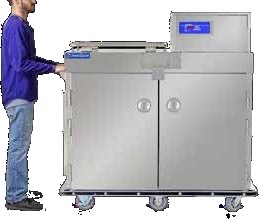
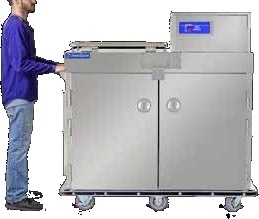
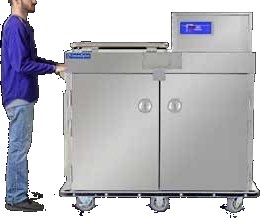
Photographs of models named on this page. Pan and tray arrangements shown are the photographed configuration, not a capacity statement. Use the model sheet for capacity.
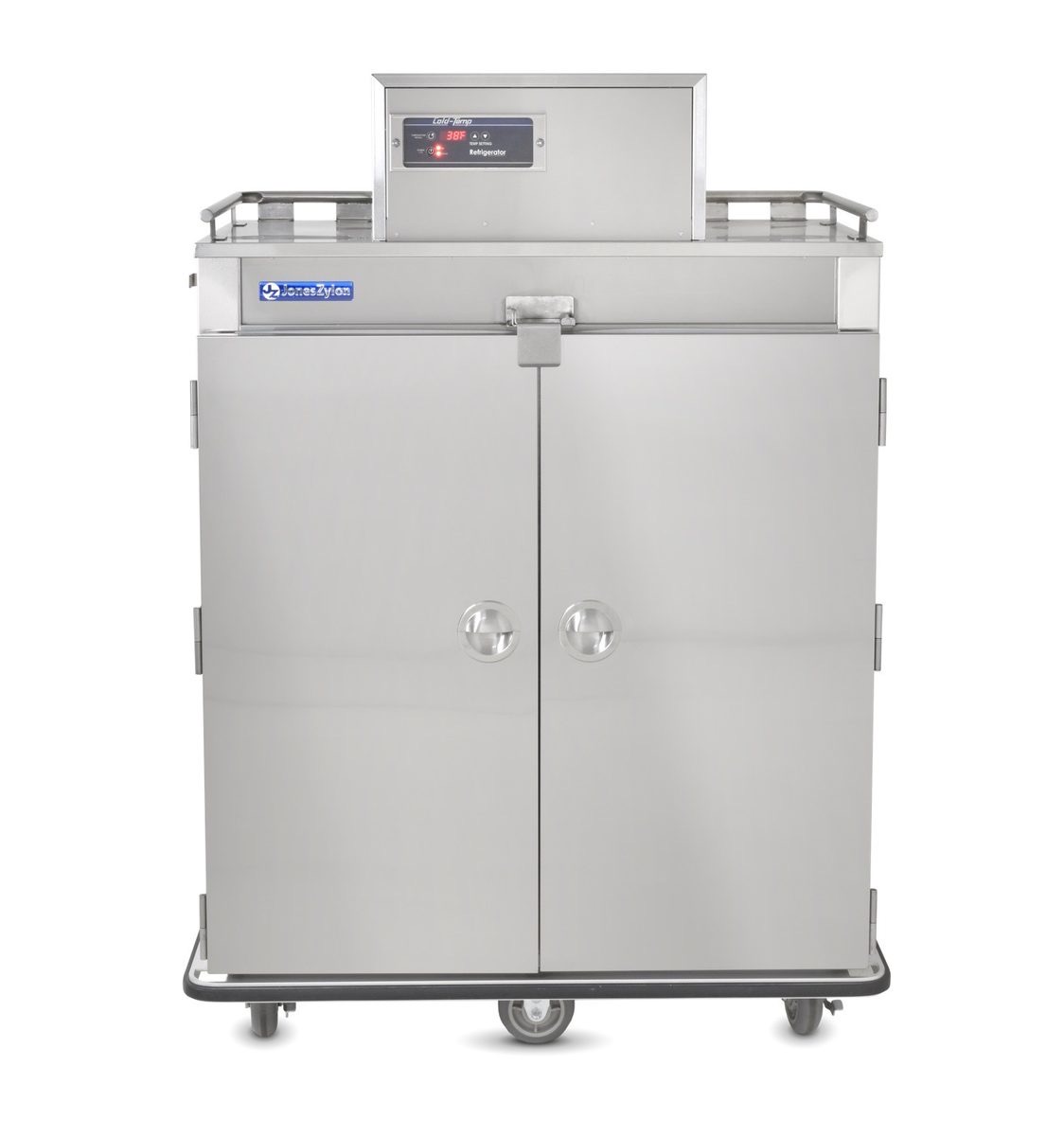
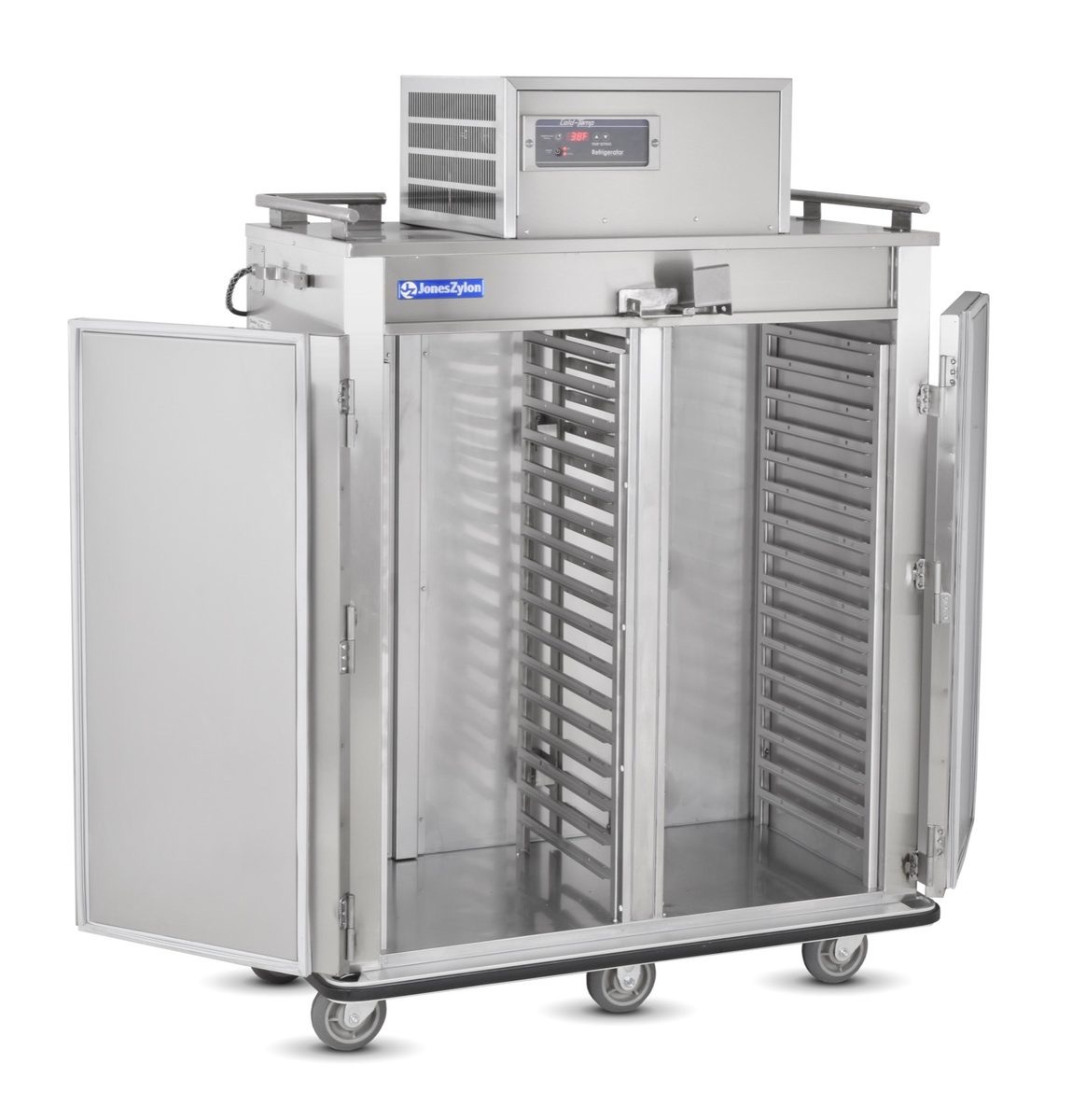
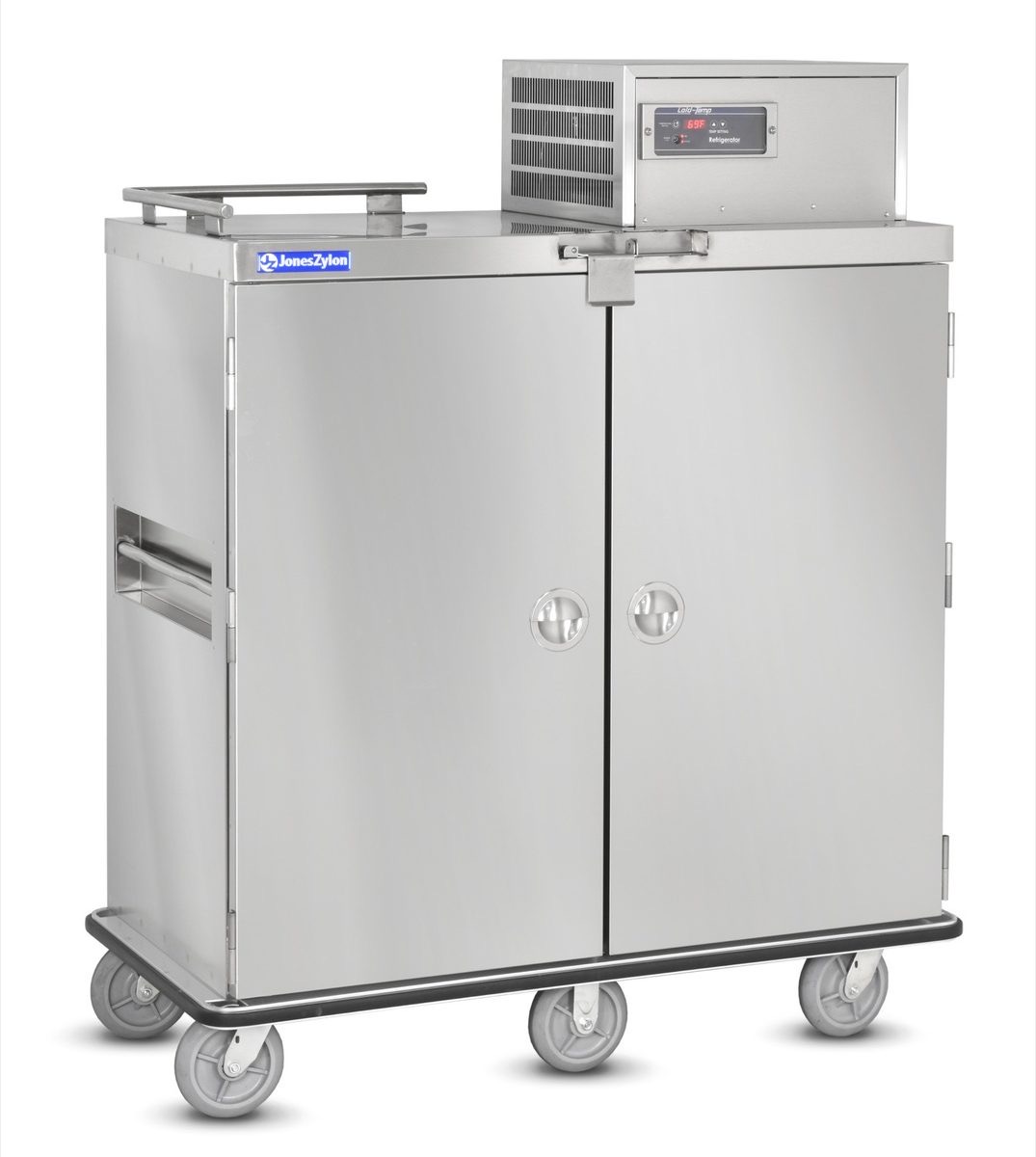
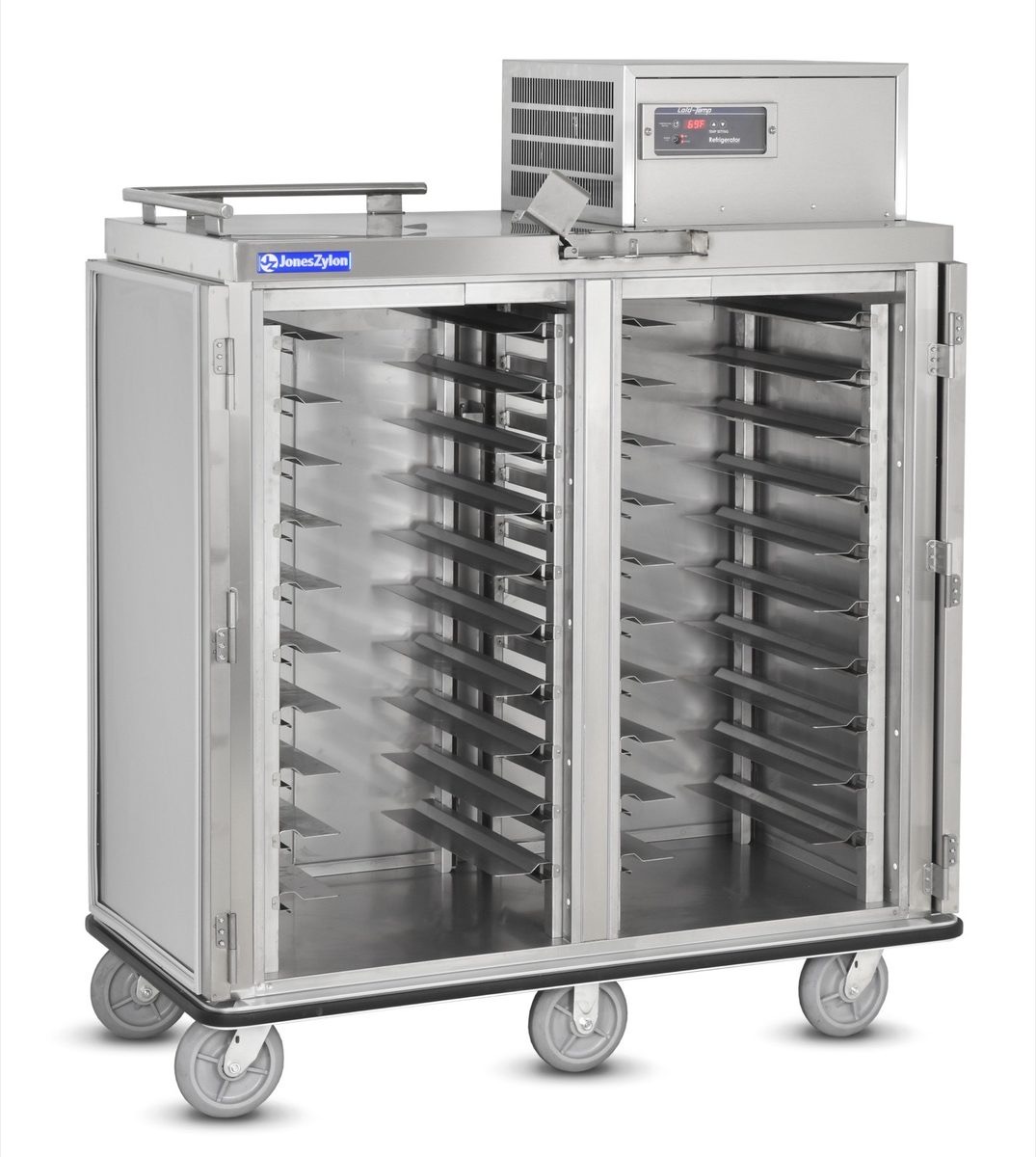
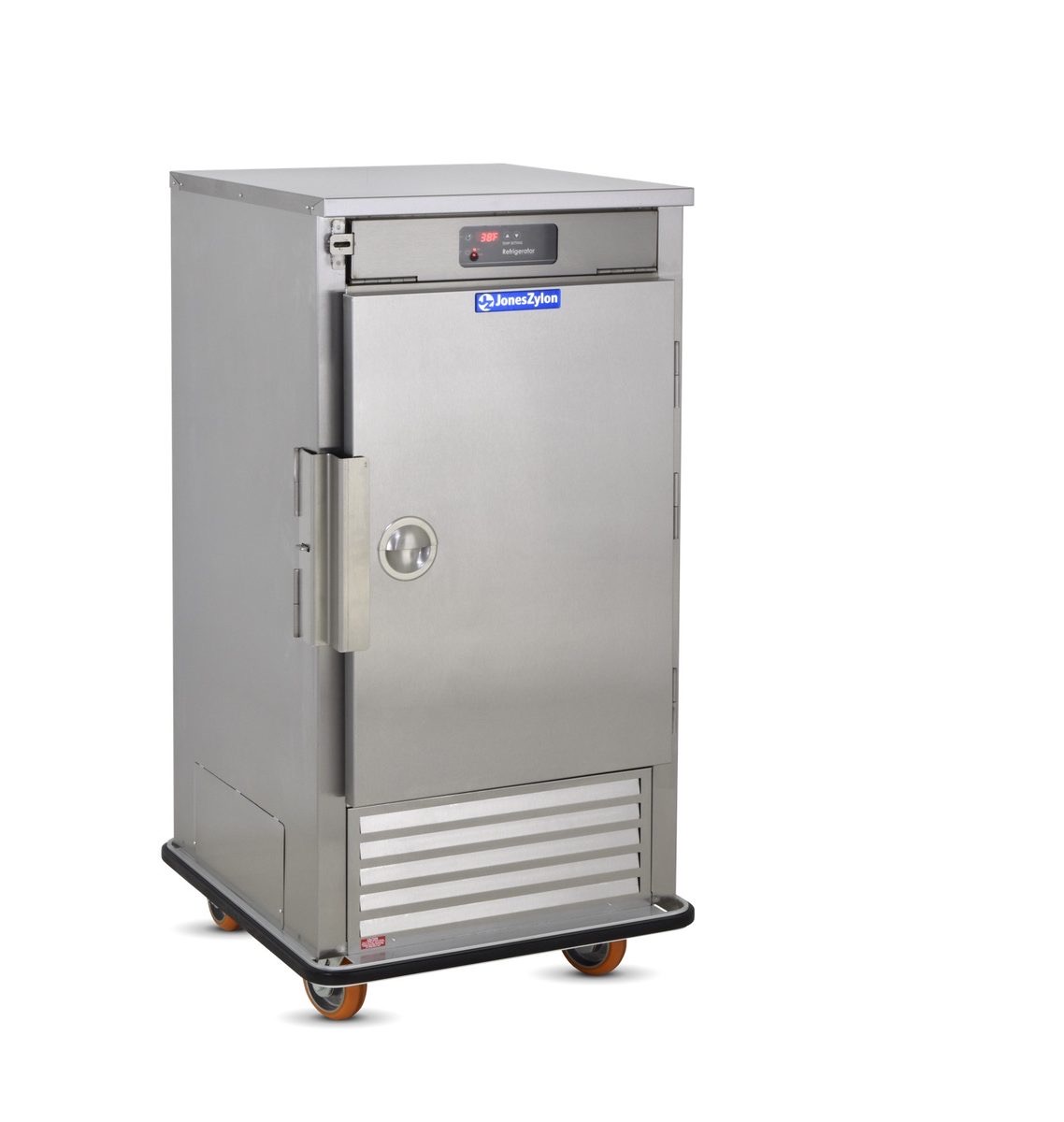
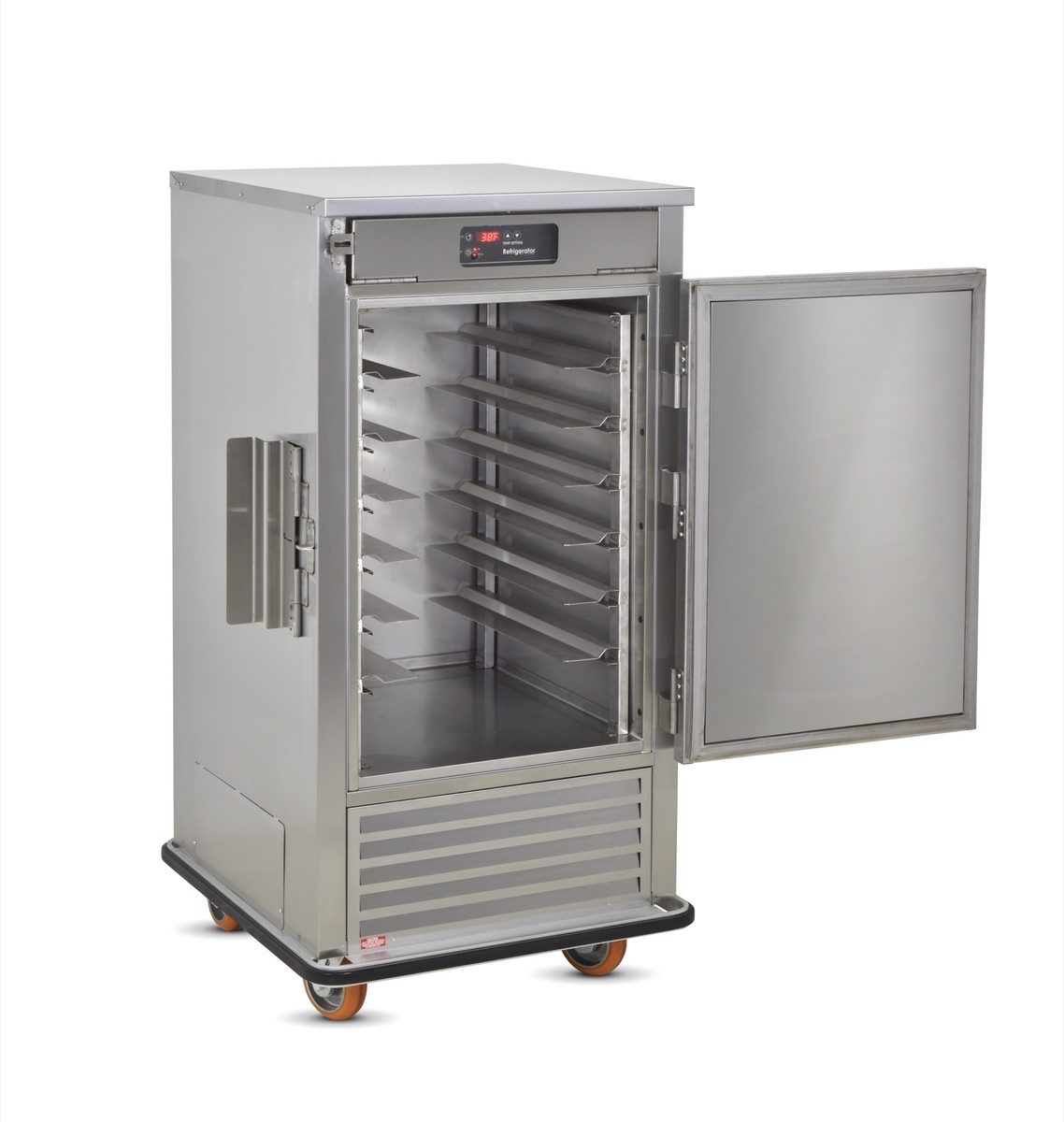
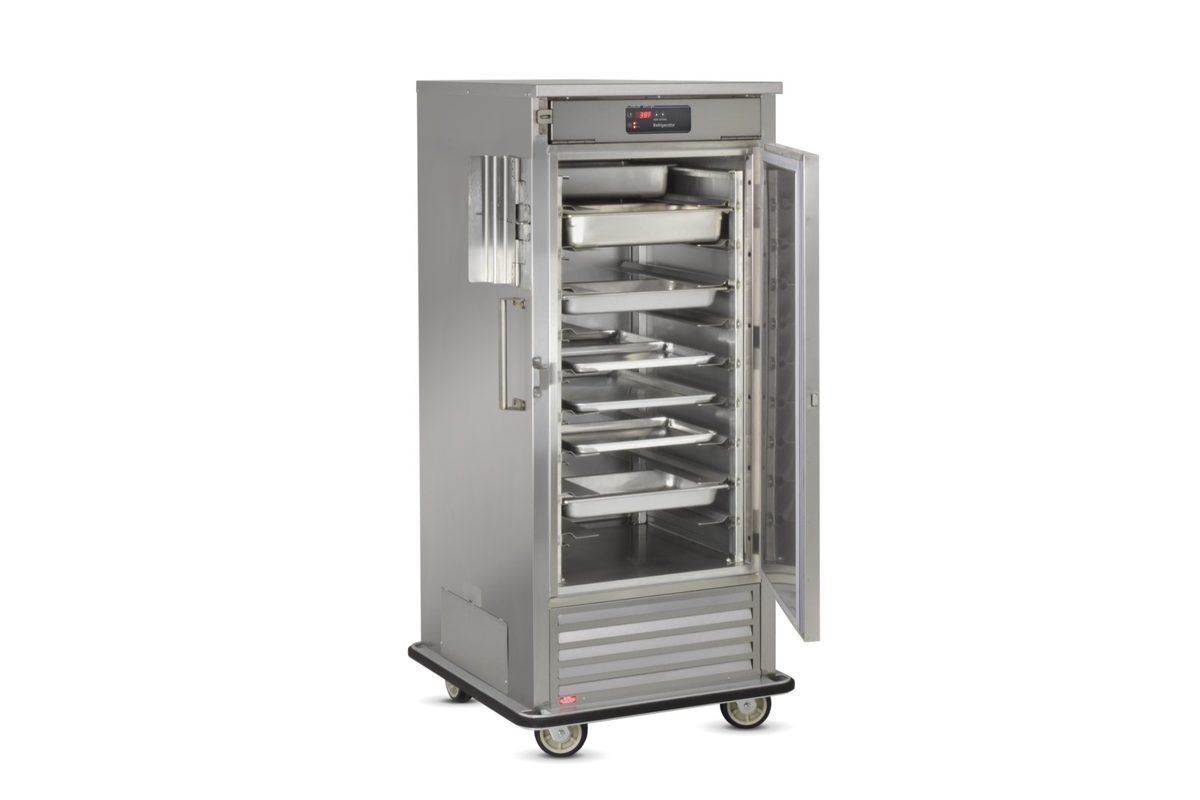
JonesZylon equipment carries a one year parts and labor warranty for defects in material and workmanship, running from the date of original shipment from the plant. All labor is to be performed by a JonesZylon-approved service agency that obtains a Warranty Service Authorization number before the repair. See the full warranty terms.
Frequently asked questions
Does a refrigerated cart reheat food?
These sheets cover refrigerated holding. For reheating, request retherm equipment documentation and confirmation of the process and tray compatibility.
Can a refrigerated cart operate unplugged?
The sheets document mains power. They do not establish active refrigeration while disconnected or a food-temperature duration for the trip.
Can I use the model suffix as the meal count?
Use the sheet row for the actual tray and rack arrangement. Count complete meals separately when each meal has several containers.
Are the JZR-6UBT and JZR-10UBT pan depths the same?
The JZR-6UBT sheet lists 12 × 20 × 2.5-inch hotel pans. The JZR-10UBT sheet lists 12 × 20 × 4-inch hotel pans. [6] [7]
What should a route demonstration include?
Use the proposed load and lid arrangement. Include controlled-door waits, receiving power, the facility food checks and the return-to-cleaning sequence.
Review your cart configuration with JonesZylon
Send the tray or pan model, meal route, load and available power.
800-848-8160 | solutions@joneszylon.com | 305 Center Street, West Lafayette, OH 43845