Equipment for private operators and food service contractors
Document who owns, approves, maintains and replaces each item before standardizing the fleet.
TL;DR
- A private operator or food service contractor needs a site-specific equipment register and a written responsibility split. Regional managers can coordinate trials and replacement planning, while the agency or operator confirms approvals, ownership, service obligations and the purchasing route.
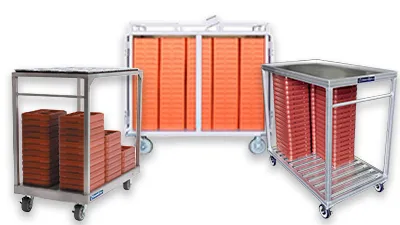
Who buys equipment under a correctional food service contract?
Identify the facility food service director, contractor district or regional manager, operator procurement contact and agency contract administrator. Have the contract reviewer assign authority for the proposed purchase. The kitchen may need agency approval, operator capital approval or a contract amendment before placing the order.
The DC DOC food service policy provides a documented example of contractor oversight and a food service contract administrator.[1] Review the service agreement for your facility. Record who owns the existing equipment, who pays for replacement, who authorizes a changed tray system and who receives assets when the service agreement ends.
Prepare a responsibility record for equipment purchase, routine cleaning, scheduled maintenance, repairs, damage, missing dinnerware and disposal. Give every task a named organization and approving role. Attach the contract clause that assigns each responsibility.
How do operators standardize across different facilities?
Survey each site's meal count and service layout. Separate chow hall service, in-cell delivery, segregation meals and remote units. Record the share of each route and its longest delivery interval. The same overall population can create different dispatch loads when housing units have different schedules or one facility plates meals at the destination.
Use a site exception list for doorway clearance, power, tray format, dishwashing equipment and local handling policy. Keep every accepted model and lid code in the equipment register. A region can use shared purchasing records while retaining specific configurations for the sites that need them.
What does a regional equipment pilot measure?
Planning example, assumed counts. Site A serves 200 meals, including 40 delivered to cells. Site B serves 300 meals, including 150 delivered to cells. The in-cell shares are 20% and 50%. Use the assumed regional total of 500 meals alongside each site’s route load when testing this calculation. Replace the example inputs with site records before sizing carts.
- Have each site confirm its counts, menu, diet list and service times. Separate segregation handling from the broader in-cell total where the procedure differs.
- Approve a trial configuration for each route. If a tested route load is 50 complete meals, Site A's 40-meal cell route needs 1 loaded departure and Site B's 150-meal route needs 3. Replace the assumed load with the result of the site trial.
- Run the meal dispatch under normal staffing and access rules. Log preparation, loading, route waiting, handoff and return time. Record required food checks with the facility procedure.
- Reconcile dinnerware at return and complete the approved cleaning, sanitizing and drying cycle. Record stock available for the next service and any additional pieces needed while another set is unavailable.
- Review results with the agency or operator and contractor together. Keep accepted models, exceptions, training responsibilities and service contacts in the site handoff record.
How should contractors compare equipment costs?
Build a record from current quotes and observed operating data. Separate equipment, trays, lids, racks, installation needs, training, freight and spare parts. Use actual replacement records for damaged and missing pieces. Record observed staff time by loading, delivery, return and washing task so an equipment proposal shows where the work occurs.
Keep the analysis tied to the remaining contract period and who owns the assets at its end. An investment paid by the contractor may have a different approval path from an agency-owned replacement. The tray cost calculator can support scenario arithmetic when the facility supplies its assumptions. Use documented costs and replacement records to test the scenario before forecasting savings.
How do sanitation and service obligations cross the handoff?
At mobilization, record model and serial information, equipment condition, usable dinnerware stock and available care instructions. Identify damaged or missing items and the party responsible for resolving them.
During operations, follow the facility's wash, rinse, sanitize and air-dry procedure and the product-specific care instructions. Keep cleaning records separate from repair records, with a named recipient for faults found during cleaning. CDC guidance addresses damaged trays, spare ware and temperature documentation.[3] The cart maintenance resource helps organize model and service information.
Which standards and purchasing routes apply across a portfolio?
Record the governing standard and edition for every site. An ICE contract needs its assigned detention standard; a state institution or county jail needs its agency and local requirements. The reviewed NDS 2025 food service section includes equipment specification, cart inspection and supervision topics that belong in an applicable site review.[2] Federal institutional work needs its own manual and contracting review.
Have procurement review the purchasing route for each site. Schedule a Virtual Demo with the regional manager and site staff, Request Free Samples for the meal trial, and send the accepted configuration with the quote request.
Standards and purchasing guides
ICE detention food service standards; ACA food service standards.
Frequently asked questions
Does the food service contractor always own the equipment?
Read the service agreement and asset schedule. Record who owns existing and newly purchased equipment, who approves replacement and what happens at contract expiration or a change in operator.
Can a regional manager standardize the same cart everywhere?
The regional manager can coordinate the specification and trials. Each site still needs accepted tray and lid combinations, route clearances, available power, care instructions and required agency or operator approval.
What should be counted at a contract handoff?
Record usable trays, lids, utensils and other dinnerware by model, along with equipment identification and condition. Document damaged or missing items, service records, open faults and responsibility for resolving them.
Can a pilot prove lower meal-delivery costs?
A pilot can record task time, required equipment, usable stock and observed replacement needs. Compare those findings with current quotes and contract responsibilities. Keep assumptions and the observation period visible before using the result in a purchase decision.
Plan the equipment review with JonesZylon
Send your menu, route measurements, current model codes and purchasing requirements.
800-848-8160 | solutions@joneszylon.com | 305 Center Street, West Lafayette, OH 43845
Sources
- DC DOC Food Service Program policy 2120.3F, November 2022. https://doc.dc.gov/sites/default/files/dc/sites/doc/publication/attachments/PP%202120.3F%20Food%20Service%20Program%2011-03-2022.pdf (accessed 2026-09-05)
- ICE National Detention Standards 2025, section 4.1 Food Service. https://www.ice.gov/doclib/detention-standards/2025/nds2025.pdf (accessed 2026-09-05)
- CDC model food safety practices for correctional facilities, 2024 guidance. https://www.cdc.gov/correctional-health/media/pdfs/2025/02/Model-Food-Safety-Practices-for-Correctional-Facilities_508.pdf (accessed 2026-09-05)