ServeSmart vs. insulated trays
Compare the complete meal route, return cycle and purchasing plan.
TL;DR
Choose with measured route and wash-cycle records. Compare trays, lids, carts, labor, sanitation, storage and waste using the same meal count and time period.
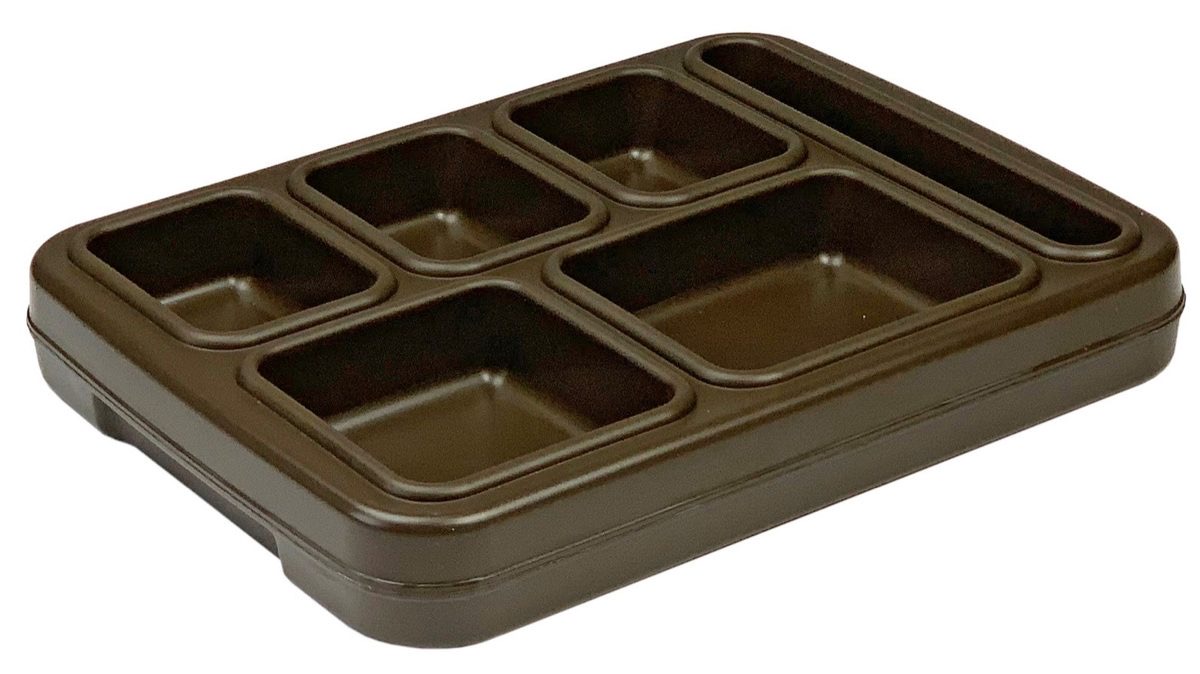
Which meal delivery system fits the route?
Compare the equipment, tray handling and return process that each route requires. A SmartTray program uses stacking trays with a selected cart configuration. An insulated tray program uses insulation within the tray and a compatible transport arrangement. A disposable program purchases meal containers repeatedly and needs a waste collection process. Record the temperature-control equipment for each option separately.
| Check | SmartTray with cart | Insulated tray program | Disposable program worksheet |
|---|---|---|---|
| Tray arrangement | SMART-5 stacks without a lid on every tray to separate meals. [1] | PRTS-5000 stacks with or without lids. Its sheet names PRTSL-5000 as the compatible lid. [2] | Enter the selected container and closure method from the supplier's sheet. |
| Purchasing unit | SMART-5, 12 trays per case. [1] | PRTS-5000, 12 trays per case. Order and count lids separately. [2] | Enter containers per case and whether covers are included. |
| Cart planning | JZH-54-RH lists 54 standard SmartTrays. [3] JZH-6UBT-RH lists 90 standard SmartTrays. [4] TC-136 holds 136 and TC-170 holds 170. [5] [6] | TC-136 holds 90 PRTS-5000 trays. [5] TC-170 holds 105. [6] | Enter a confirmed loaded count for the selected container and transport equipment. |
| Return process | Count returned trays, wash, sanitize, dry and inspect before reuse. | Count trays and any separate lids, then follow the approved wash and inspection process. | Plan container collection, waste handling and replenishment. Count any reusable utensils separately. |
Fill the disposable column with the dimensions, prices and performance documentation for the product you are considering. The reusable columns describe the named JonesZylon specifications. Neither tray dimensions nor cart capacity establishes a route's food holding time.
SmartTray and cart workflow step by step
- Set the meal count. Separate housing units, special diets and delayed meals. Identify whether each meal uses one tray or additional components.
- Prepare the equipment. Check the cart, route access and power arrangement against the selected configuration's instructions. Plan cold components separately for a heated-only cabinet.
- Portion and stack. Load the menu into the selected SmartTray. Check food clearance with the next tray and confirm how the top of each stack will be covered.
- Load by delivery order. Count trays before dispatch.
- Deliver and reconcile. Record departure, arrival, serving sequence and the facility's required food-temperature observations. Count trays and utensils at issue and return.
- Return to the dish room. Separate dirty returns from clean staging, inspect items and release dry inventory for the next service.
Insulated tray workflow step by step
- Check existing inventory. Identify tray and lid models, serviceable quantities and the cart arrangement used on each route.
- Prepare the meal. Follow the facility's approved preparation and holding process for each food component. A tray's material temperature range does not establish food temperature.
- Portion and close. Confirm whether the chosen arrangement uses individual lids or tray-on-tray stacks. PRTS-5000 supports stacking with or without lids. [2]
- Load and deliver. Check stack height, stability, doorway access and the order of diet trays. Record actual delivery and return times.
- Collect and wash. Reconcile trays, lids and utensils. Include separate lids in dish-room counts when the route uses them.
Disposable meal service workflow
- Receive cases, check pack count and reserve clean storage for unopened supplies.
- Assemble the meal using the container supplier's handling instructions. Include separate covers, cups and utensils in the issue count.
- Load the selected transport equipment and document the route's holding and delivery process.
- Issue meals, collect used containers and account for utensils under facility policy.
- Remove waste through the designated route, clean reusable transport equipment and reconcile stock before reordering.
How many trays, cart loads and delivery trips?
Calculate each route separately. Required tray inventory = trays issued per service + trays still in return, washing or drying + reserve trays. Use the longest observed turnaround when testing whether clean inventory is ready. Calculate lid inventory separately from tray inventory.
Cart loads per service = round up(route trays ÷ confirmed usable tray capacity). Total daily loads = the sum of loads for each route and service. Delivery staff-hours = trips × elapsed hours per trip × staff assigned. State whether a trip moves one cart or several carts. Use the observed trip time and crew size to calculate staffing.
The two heated cabinets above list 120 volts, 1700 watts and 14.2 amps. [3] [4] Use a loaded trial to check doors, turns, thresholds, elevators and handoff space. The calculator's capacity-only cart mix needs those route checks.
Tray washing, sanitation and storage
SMART-5 and PRTS-5000 sheets both state dishwasher suitability. [1] [2] Obtain the care instructions for the selected items and use the facility's approved wash, rinse, sanitizing and drying process. Record rack loading, wash cycles and the time until trays are dry and ready. Follow the cart's separate cleaning instructions for powered assemblies.
Track the full return cycle from housing-unit collection through inspection and clean storage. Inspect contact surfaces, edges, lids and stacking condition. Route damaged items for review under the facility's removal criteria. Record missing trays separately from damaged trays so replacement purchasing has an identifiable cause.
Measure clean rack space, dirty-return staging, empty cart parking, lid storage and unopened disposable cases. Record peak occupancy during overlapping meal periods. Record how staff use any freed space. Count a cost reduction only when the facility can identify an expense it avoids.
System cost formulas to fill with your records
- Tray unit price = quoted case price ÷ trays per case. Keep lid and utensil prices on their own lines.
- Initial reusable purchase = round up(max(0, required trays − usable stock − quote-confirmed included units) ÷ case count) × case price.
- Annual replacement purchase = round up(inventory × entered annual replacement percentage ÷ 100 ÷ case count) × case price. State whether unused case balances carry forward.
- Disposable purchase = round up(annual meals × containers per meal ÷ containers per case) × case price. Add covers and other separately purchased items.
- Annual labor = total staff-hours for assembly, delivery, returns, washing and waste handling × loaded hourly cost.
- Annual operations = labor + water + chemicals + energy + waste charges + maintenance + other recurring supplies.
- Comparison-period cost = initial purchases and installation + annual replacements and operations × years + scheduled equipment replacement. Add financing, tax, freight and disposal costs where applicable.
Keep existing sunk purchases outside a forward cash comparison. Include future equipment replacement in both options. Use the calculator for constant-price scenarios, and attach a dated worksheet for variable annual costs. Enter replacement rates from facility records and prices from dated quotes.
Where insulated trays still make sense
Retain an insulated program when serviceable inventory, compatible carts and a measured route already meet the facility's requirements at an acceptable ongoing cost. Short delivery distances, small meal counts and adequate wash capacity can support retaining that arrangement. Check your actual records before paying to replace functioning equipment.
Different housing units may need different arrangements. A longer route can be evaluated independently while a short route retains its existing trays. Temporary service or a return path that cannot support reusable collection may warrant a disposable evaluation. Confirm security handling, waste access and supply storage for that use.
What are the benefits of switching from insulated trays to SmartTrays?
When those conditions do not hold, JonesZylon points to four benefits of moving from insulated trays to SmartTrays.
- More trays per cart, so fewer carts. The TC-136 sheet prints 136 SmartTrays or 90 PRTS-5000 insulated trays for the same cart, and the TC-170 sheet prints 170 SmartTrays or 105 PRTS-5000 trays. [5] [6] At those counts, 270 trays take 2 TC-136 loads as SmartTrays and 3 loads as PRTS-5000 trays.
- Lower tray cost. JonesZylon confirms that a SmartTray costs less than an insulated tray.
- Longer tray life. JonesZylon rates SmartTrays as much more durable than insulated trays. The ServeSmart Buying Guide describes them as solid molded trays designed to protect food and last longer. [7]
- Better food temperatures with a heated cart. JonesZylon reports better food temperature satisfaction when SmartTrays ride in a heated cart, especially for high meal volumes and long delivery distances. In that pairing, the heat comes from the cart's heating assembly instead of the insulation in each tray.
Measure the change on your longest route with the workflow and cost formulas above.
What to bring to a system quote
Provide meal counts by route, menu and diet examples, tray and lid models, measured clearances, available power, wash turnaround and itemized purchase records. Ask for a loaded configuration and separate prices for trays, lids, carts, racks, delivery and service items. Request a Quote or Schedule a Virtual Demo to review that arrangement.
Frequently asked questions
Does every insulated meal tray need an individual lid?
Check the exact model and service arrangement. The PRTS-5000 sheet states that it stacks with or without lids and names PRTSL-5000 as its compatible lid.
Does the calculator predict savings?
It calculates the costs of your entered scenario. You supply the prices and replacement rates; the cost difference can favor either option.
Can cart capacity be treated as meals per trip?
Only after confirming how many trays each meal uses, the loaded configuration and the number of carts moved per trip. Calculate each route and meal service separately.
Why switch from insulated trays to SmartTrays?
JonesZylon gives four reasons. More SmartTrays fit in a cart, so fewer carts are needed. SmartTrays cost less than insulated trays and are much more durable. Paired with a heated cart, they give better food temperature satisfaction, especially for high volumes and long distances.
How should replacement rates be compared?
Use the same observation period and inventory definition for each program. Separate loss, damage and stock growth, and test an assumption range when operating records are incomplete.
Talk to a JonesZylon corrections specialist.
800-848-8160 | solutions@joneszylon.com | 305 Center Street, West Lafayette, OH 43845
Sources
- SMART-5 copolymer SmartTray specification. /pdf/Dinnerware/Compartment%20Trays/SmartTray-Copolymer.pdf (accessed 2026-09-07)
- PRTS-5000 insulated tray specification. /pdf/Dinnerware/Insulated%20Trays/PRTS-5000.pdf (accessed 2026-09-07)
- JZH-54-RH heated cabinet specification, standard SmartTray capacity. /pdf/Equipment/Heated%20Carts/JZH-54-RH.pdf (accessed 2026-09-07)
- JZH-6UBT-RH heated cabinet specification, standard SmartTray capacity. /pdf/Equipment/Heated%20Carts/JZH-6UBT-RH.pdf (accessed 2026-09-07)
- TC-136 enclosed transport cart specification. /pdf/Equipment/Transport%20Carts/TC-136.pdf (accessed 2026-10-26)
- TC-170 enclosed transport cart specification. /pdf/Equipment/Transport%20Carts/TC-170.pdf (accessed 2026-10-26)
- ServeSmart Buying Guide. /pdf/servesmart/ServeSmart%20Buying%20Guide.pdf (accessed 2026-10-26)