18 × 14 Dietary and Cafeteria Trays
Compare the three documented flat trays by material, printed temperature range and loaded place setting.
TL;DR
- Compare the three documented flat trays by material, printed temperature range and loaded place setting. PPST-18 is copolymer, ST-18 is polycarbonate and FXST-18 is MaxFlex.
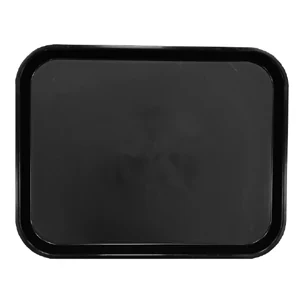
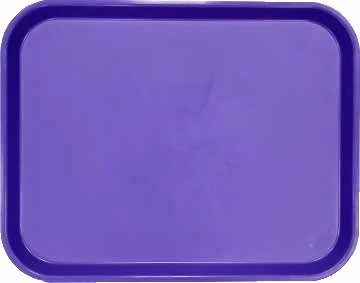
What is an 18 × 14 dietary tray used for?
A flat dietary tray carries a place setting of separate plates, bowls and drinks. Build the sample place setting with your menu and the dishes staff already use. Check whether each dish stays within the tray perimeter, whether staff can grip the loaded tray and whether the arrangement fits the cart. The PPST-18 sheet describes a tray strong enough to hold plates, bowls and drinks.
The three documented models share an 18 × 14 × 0.8 inch geometry. ST-18 is polycarbonate. [2] PPST-18 is copolymer [1] and FXST-18 is MaxFlex. [3]
| Model | Specifications | Source |
|---|---|---|
| PPST-18 | Copolymer Flat tray; 18 x 14 x 0.8 in (L × W × H). 24 trays per case. Printed temperature range -32 to 212 °F. | 18x14 Dietary Tray.pdf |
| ST-18 | Polycarbonate Flat tray; 18 x 14 x 0.8 in (L × W × H). 24 trays per case. Temperature range not printed. | Polycarbonate 18x14 Dietary Tray.pdf |
| FXST-18 | MaxFlex Flat tray; 18 x 14 x 0.8 in (L × W × H). 24 trays per case. Rated -40 to 225 °F, the JonesZylon rating for MaxFlex. | MaxFlex 18x14 Dietary Tray.pdf |
How do the three dietary tray materials differ?
PPST-18 is identified as copolymer and prints a temperature range of -32 to 212 °F. FXST-18 is identified as MaxFlex, which JonesZylon rates at -40 to 225 °F. ST-18 is polycarbonate; its sheet does not print a temperature range.
For FXST-18, the manufacturer’s sheet prints flexural modulus < 50,000 psi and Shore D hardness > 40. Have staff evaluate FXST-18 with the meal, separate dishes and facility handling procedure. Keep these manufacturer claims attached to FXST-18 in the review record.
JonesZylon dinnerware carries a 12-month warranty from the date of purchase against defects in material or workmanship. Dinnerware determined to be defective due to improper material or workmanship, at the sole discretion of JonesZylon, will be replaced at no charge. See the full warranty terms.
How should special-diet meals be assembled?
- Match the meal identifier to the approved menu and the assigned serving location before placing dishes on the tray.
- Load the main dish, sides and beverage in the intended arrangement. Check access to the tray edge and any area needed to grip it.
- Have the designated staff member check the complete meal before it leaves the trayline. Follow the facility’s identification and food-handling procedure.
- Load the actual tray and dishes into the selected cart. Check shelf spacing, dish clearance and access for removal.
- At return, separate dishes and utensils from the carrier tray. Reconcile each inventory group before washing.
Photograph the approved loaded arrangement for the trial record. Include any dish lid or beverage cover used during transport. Measure clearance above the bowl, mug handle and covered dish with the full place setting loaded.
How to test a dietary tray through a meal service
- Build the largest planned place setting on the sample tray. Record the plate, bowl, beverage and utensil models and check that staff can grip the tray edges.
- Check meal identification against the diet roster before dispatch. Keep the identification readable through transport and handoff under the facility procedure.
- Carry the full arrangement along the route and through the actual opening. Record dish movement, tipping and the usable number of complete meals per cart load.
- Count returned trays and individual dishes. Separate the pieces for the approved wash, rinse and sanitation cycle, inspect the tray surface and corners, then dry before stacking.
All three linked dietary tray sheets state dishwasher suitability. Confirm detergent concentrations, sanitation contact times and the wash program for the selected material and your kitchen’s machine; the sheets leave those settings unspecified. Let washed pieces dry before assembling the next place setting.
How many dietary trays should a facility order?
Count carrier trays and each dish in the approved place setting separately. Use the dinnerware inventory method for overlapping services, reserves and case conversion.
Count complete place settings in the loaded cart, including covered dishes and mugs. Use that capacity in the cart-load and trip calculation.
What should be included in the sample request?
Identify the carrier tray, the plates and bowls it will carry, the cup style and any lids. Provide the cart opening and usable shelf measurements. Include the heaviest loaded menu you intend to evaluate and describe any serving location where staff have limited handling space. Record acceptance for the complete arrangement before converting the trial to an order.
Frequently asked questions
What are the dimensions of the dietary trays?
PPST-18, ST-18 and FXST-18 each print 18 × 14 × 0.8 inches in the linked sheets.
What is the ST-18 tray made of?
Polycarbonate. JonesZylon confirms ST-18 is the polycarbonate model in the 18 × 14 dietary tray family.
What temperature range applies to FXST-18?
JonesZylon rates the MaxFlex dietary tray FXST-18 at -40 to 225 °F, the same as the rest of the MaxFlex line.
How many dietary trays are in a case?
Each of the three linked dietary tray sheets prints 24 trays per case.
Can a dietary tray carry separate dishes?
The PPST-18 sheet describes carrying plates, bowls and drinks. Test the complete loaded arrangement with your actual dishes and cart.
Does a flat tray identify a special diet?
Use the facility’s meal identification and checking procedure. Specify the tray and dish arrangement separately from the meal identifier.
Request the tray and dish combination for your facility
800-848-8160 | solutions@joneszylon.com | 305 Center Street, West Lafayette, OH 43845
Sources
- 18x14 Dietary Tray specification (PDF). /pdf/Dinnerware/Dietary%20Trays/18x14%20Dietary%20Tray.pdf (accessed 2026-09-08)
- Polycarbonate 18x14 Dietary Tray specification (PDF). /pdf/Dinnerware/Dietary%20Trays/Polycarbonate%2018x14%20Dietary%20Tray.pdf (accessed 2026-10-26)
- MaxFlex 18x14 Dietary Tray specification (PDF). /pdf/Dinnerware/Dietary%20Trays/MaxFlex%2018x14%20Dietary%20Tray.pdf (accessed 2026-09-08)